|
REVIEW ORIGINALLY PUBLISHED BY AUREALIS MAGAZINE WRITTEN BY REBECCA LANGHAM GENRE: Fantasy
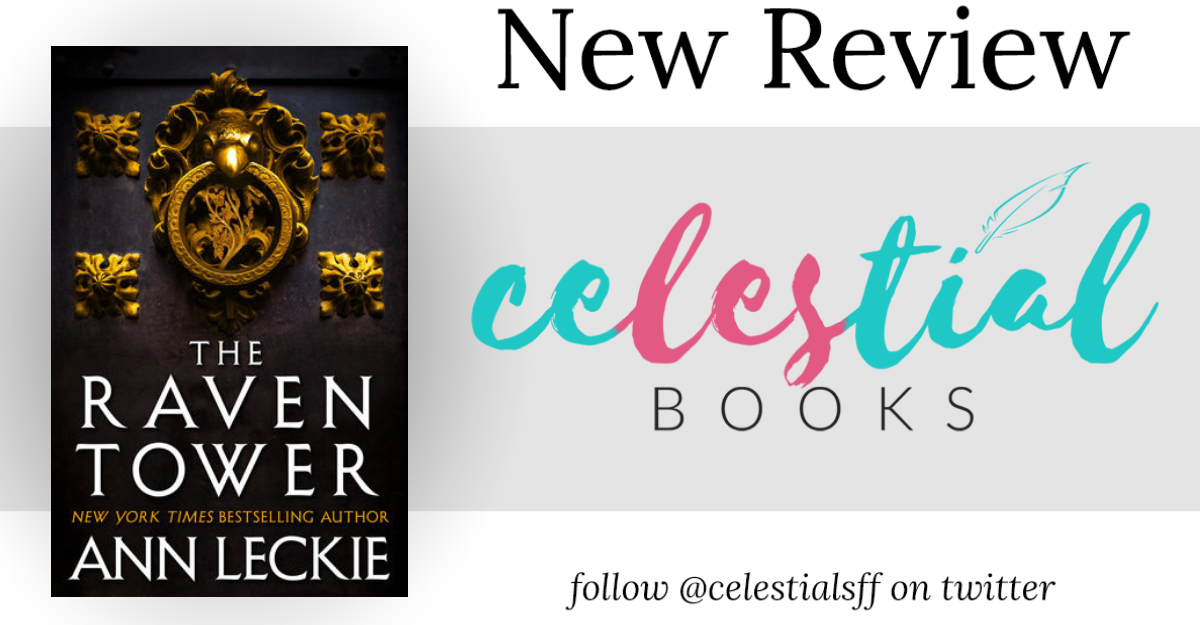
MAIN PAIRING: Nil. Very light on romance - subtle undertones of a M(trans)/F relationship and brief mention of M/M relationships REP: Trans main character After four successful sci-fi novels, The Raven Tower constitutes Ann Leckie’s first foray into the fantasy genre. The story begins with the disappearance of the Lease of Iraden, a ruler who owes the Raven a debt of blood that must be paid lest Iraden lose its divine protection. The Lease’s tempestuous heir, Mawat, refuses to believe his father has shirked responsibility, and begins a gentle unfolding of machinations that lead Iraden to political and spiritual crossroads. The narrator, like most aspects of The Raven Tower, is not what you’d expect. This ageless, rock-bound deity has a story to share with a human named Eolo. The Strength and Patience of the Hill does not meddle in the lives of humans as other gods do, but rather stares at the stars, contemplating what it means to possess power, and what limits power may have. We discover the deity’s fate is strangely entwined with Iraden’s. Intelligent, compassionate and diplomatic, Eolo is a fabulous protagonist. He is the humble son of a farmer who has become a trusted aide to the Lord Mawat. Eolo’s transgender identity is a passing mention in a world where diversity is a natural occurrence of the cultural landscape. Eolo’s penetrating dialogue and complex characterisation are the strongest aspects of the story. It is complex to discuss the magnificent revelations of this novel without giving the ending away. Unconventional in its low action—there’s barely a sword or sorcerer in sight—the book establishes and maintains a taut sense of intrigue. The Raven Tower is an ambitious novel that explores new territory and that in itself warrants praise.
0 Comments
REVIEWED BY J.S. FIELDS
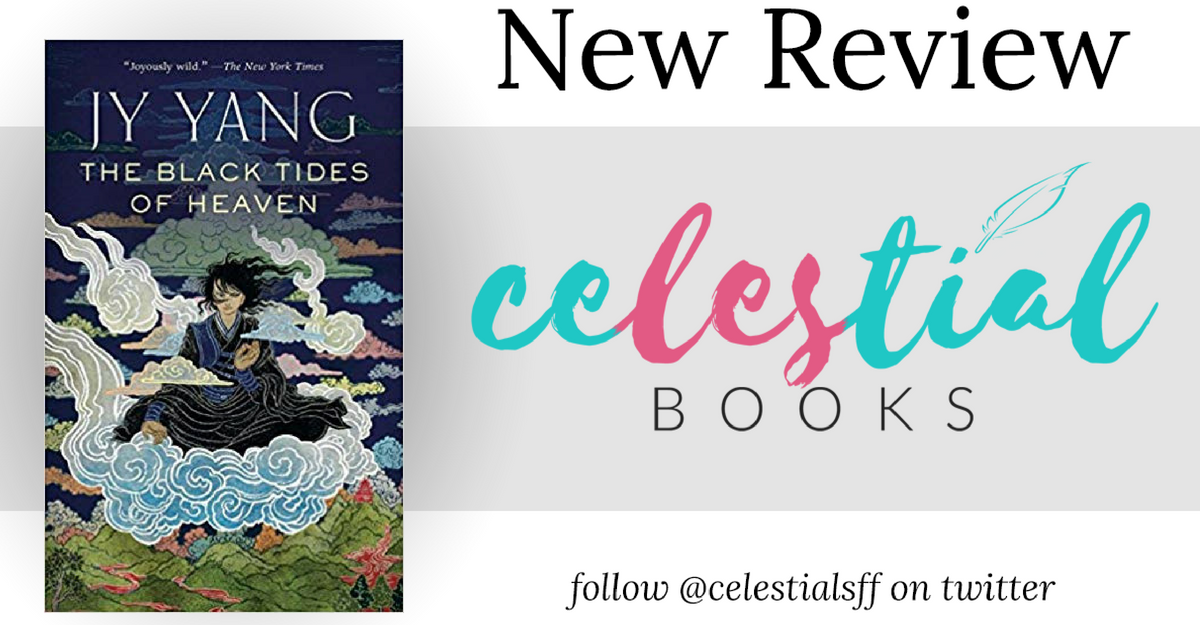
Genre: fantasy (silk punk) (novella) Pairings: trans (masculine)/m Queer Representation: transgender, nonbinary Warnings: none Rating: 4 stars Review (this is one of the rare times when the back of book blurb is accurate, so I'm just going to copy it below) Mokoya and Akeha, the twin children of the Protector, were sold to the Grand Monastery as infants. While Mokoya developed a strange prophetic gift, Akeha was always the one who could see the strings that moved adults to action. While Mokoya received visions of what would be, Akeha realized what could be. What's more, they saw the sickness at the heart of their mother's Protectorate. A rebellion is growing. The Machinists discover new levers to move the world every day, while the Tensors fight to put them down and preserve the power of the state. Unwilling to continue as spawn in their mother's twisted schemes, Akeha leaves the Tensorate behind and falls in with the rebels. But ever step Akeha takes toward the Machinists is a step away from Mokoya. Can Akeha find peace without shattering the bond they share with their twin? Characterization Nonbinary fiction written by a nonbinary author is right up my alley! This novella was short and sweet, with excellent pacing and perfect character development. The twins, in particular, are very well thought out, and their evolution from children to rebels is delightful at every turn. The mother (The Protector) is that kind of delicious evil you can salivate over--power hungry but respects a challenge ala Lionel Luther from Smallville (don't pretend you never watched that show. It was on for ten seasons. You had to have seen it once, if only for Johnathon Glover's hair). The world, in particular, is very well done. The idea that children are born and raised androgynous and then must declare their gender (and then go through a medical transition to achieve it) was much more intuitive than other instances I have read, likely due to the author's intimate familiarity with nonbinary genders. Akeha's struggle to pick within the binary when they (later they use 'he') don't have the strongest of urges to move in either direction, resonated well. The deeper look at the trans masculine experience was also fresh and authentic, and will resonate with many trans masculine and trans nonbinary readers. Steampunk versus silk punk While steampunk has never been a favorite genre of mine, I have to say that I'm now well hooked on silk punk. It has all the fun trappings of the steampunk genre (cool machine weapons and budding technology), but without the tired European aesthetic. While the pacing in this book was ideal, I wouldn't have minded staying in the world a bit longer (overthrow the Protectorate!!), especially in the last thirty pages or so (OMG WHY IS THE MOM SMILING KILL HER KILL HER WITH FIRE!) when you get a bigger look at the tech and the politics at play. I'm eager to get my hands on the other book in the duology, moreso for the world than anything else (although the characters are a bonus!). Through line The only downside to the book was a lack of strong overarching narrative. I was happy to be along for the ride, but I was never really sure where the ride was going, or what the goals of the characters were. Not everyone needs or wants that in a book, however, and the pacing was strong enough (and the book short enough) that it wasn't a major hurdle. It did leave me wondering in several places as to what the actual plot was, but then some cool new tech would come around, or Akeha would have a gender moment again, and I'd be right back in the story. Lovers of steampunk and/or lovers of enby fantasy will have a great time with THE BLACK TIDES OF HEAVEN. Bonus- the author is on Twitter, active, and they are an absolute delight to follow. You can buy THE BLACK TIDES OF HEAVEN in paperback here and ebook here. REVIEWED BY L.A. ASHTON
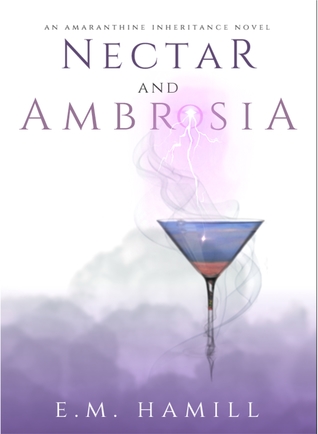
Genre: Urban Fantasy Pairings: M/F Queer Rep: Bi/Pansexuality, Demisexuality, Gay, Trans Warnings: Accounts of epileptic attacks and seizures My Rating: Four Stars Synopsis Chased by a creature that shouldn’t exist, Callie flees her home and hopes it buys her parents’ safety. But her future is uncertain, and she is wracked by mind-bending visions she can’t control. Her out of control mind somehow leads her to Nectar and Ambrosia, a bar seen by few and inhabited by the immortal—or, as we know them, the mythological. Thanks to a kind doorkeeper and a vision of an oncoming apocalypse, Callie is thrown headfirst into a multi-dimensional conflict that could eviscerate the human race. General Unique, fun, and full of twists and thrills. Weaving together mythology, current religion, and aspects of light sci-fi, Nectar and Ambrosia will take you on an adventure like none you've experienced before. And then? You’ll want more. Plot You’re thrown into this world without any knowledge or preconceptions. Luckily for us, so is Callie. Being able to learn the ropes with the protagonist was a massive bonus, and helped things feel natural instead of info-dumpy. Considering the scale of this piece, pacing novel should have been difficult. Hamill made it look easy. There’s time for mystery, tension, and breathless attempts to halt the apocalypse, but there’s also time for love and laughter. I was always itching for the next clue or a deeper glimpse of the characters. It draws you in and doesn’t let go until the final words. Setting The world in Nectar and Ambrosia is beautiful and ornate. I already want to return to Florian’s bar and mingle with its immortal patrons. Everything here was crafted with love and attention; details made the piece shine and brought the characters to life in a rich, satisfying way. Characters Like everything else in this novel, characters were created with considerable care. I loved so many gods, so many Sidhe, so many. Even ones that were questionable. Even ones I knew I shouldn’t. I would read individual stories about them all right now. Florian also stole my heart immediately—his quiet and caring nature made me long for an inter-dimensional hug. I wish I had more time with some of the side characters. I realize the cast was large and the plot was a tall order. Perhaps I'm greedy, but I blame Hamill for making me attach to them in the first place. Strangely, the only one I had trouble connecting to was Callie. This felt like a very “it’s me, not the book” type of situation. All the aspects were there, all the details and character building, but I couldn’t align with her as wholly as I often do. I finally grew more attached as the book went on, and I have a feeling we’ll fit together better if there’s a sequel. Who knows why brains work the way they do? Mine’s a mystery. It feels very difficult to discuss aspects of this piece without giving things away. Every character and set piece has its role, every scene and interaction. Sometimes I forget about the subtle Chekhov’s Gun aspect of Hamill’s work, but that’s probably her intention, isn’t? Just trust me on this: Nectar and Ambrosia will transport you somewhere amazing, and when it’s over you’re going to want to go back. If you’re having trouble believing me, Hamill offers the first three chapters for free on her site. Go, be convinced. E. M. Hamill’s official site can be found here, and her twitter is over this way. Note: I am an Amazon Associate and I am using affiliate links. These do not affect you or my reviews. From Amazon.com: Nectar and Ambrosia (print) — $12.99 | Nectar and Ambrosia (ebook) — $4.99 |
ABOUT C.B.CURRENTLY ON HIATUS FOR UNIVERSITY STUDY AND WORK. Archives
August 2020
Categories
All
|
RSS Feed